
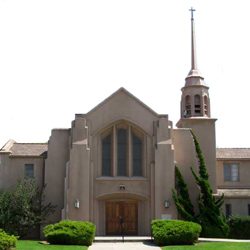
2019 2 24 “The Sermon on the Plain Part II”

Sermon for February 24, 2019

The Sermon on the Plain- Part II

Luke 6: 27-38

Rev. Liz Aguilar


We continue today in the same area of the Gospel of Luke as last week. You may recall from last week that we read about Jesus’s sermon on the Plain (otherwise known as “The Sermon on the Mount) in Matthew. Last week it was about the blessings and “woes/warnings.” Today we make our way through Jesus’s sermon some more.

Please do refer to the scripture found on pages 64 and 65 in your pew Bible.


You’ll notice that some of these scripture verses have become very well known, especially one called the “golden rule.” But in general, we can say that this scripture portion has to do with how one is to treat those who have done wrong to you. Here, Jesus challenges us to be gracious, forgiving, and to ultimately extend God’s grace to all around us.

Those are easier said than done, though, aren’t they?


This Friday I treated myself to a movie- Friday is my sabbath and I try to do something I wouldn’t normal do- not just errands but also something fun. I decided to watch the movie, “The Green Book.” 

The film is inspired by the true story of a tour of the deep south by an African-American classical and jazz pianist named, Dr. Don Shirley, and an Italian-American bouncer named Jimmy Vallalonga who served as Shirley’s driver and bodyguard.

In the movie- we see how these two very different men learn to get along and respect one another, despite their big differences. One is a working-class Italian immigrant who lives in the Bronx and the other is a very well-educated, very cultured, accomplished, professional musician who is African-American.


They travel together through the south so that Dr. Shirley can perform a series of concerts. As they travel along, Dr. Shirley is confronted by racism almost at every stop along the way.


His body guard becomes very angry and at first wants to beat up everyone who treats Dr. Shirley badly. However, Dr. Shirly teaches “Jimmy the Lip” how to rise above it, hold oneself with dignity, and keep going.

You can quickly put yourself in his shoes and you are made to wonder if you would react in that same way- standing up for yourself but not giving into violence.


In our scripture of today- Jesus says to give the other cheek if someone strikes you. To give money to those who ask of it, and expect nothing in return. To forgive. To treat others as you would want to be treated…


I wonder- have any of you ever had anyone do anything really bad to you. something that was very hard to forgive and that you will probably never forget?


Some of us might be tempted to think that Jesus’s words were easy at the time. That the people he would have been speaking to would have had easier lives. But they did not. They would have been confronted by betrayal, robbery, violence, conflict. Some would have been familiar with the stories of the prophets, Moses, the Israelites- Cane and Abel; David and Saul; Esau and Jacob- all of these famous rivalries.


Those who were traveling would have been confronted easily with thieves, people wanting to cause them harm. So no, these words wouldn’t have been easy to receive or accept.


So what about you. What about me?


I want to share with you a story that happened in the life of my family. My father came to the US and went to Chicago as an immigrant from Mexico. He had written to his half brothers whom had extended their welcome to him, letting him know that they would be available to help him out. Much to my father’s surprise, his half-brother’s wife did not allow my father to stay with them or even enter the house the first day he arrived.

Years later after my father had become a minister my uncle and his wife attended a worship service. My father introduced him to us kids. Later, I remembered who he was and what he had done to my dad many years prior.

My uncle and aunt had come to the church hoping that my father would help my uncle to find a job. My dad did just that. He still had connections at the hospital he had worked at for 12 years as a respiratory therapist, and helped my uncle secure a good job as a custodian. My uncle remained in that job until he retired many years later.

I remember I must have harbored bad feelings toward my uncle because my father would tell me, “you must forgive your uncle.” Had my dad not forgiven him and had not helped him out, my uncle’s life would have been much different. 


Forgive. Walk on. Extend Grace…

Amen.


2019-2-17 : Beatitudes For Today

Sermon: Beatitudes For Today

February 17, 2019

Text is Luke 6:17-31

Sixth Sunday of Epiphany

Rev. Elizabeth Aguilar


We are still in the season of Epiphany, when the church still celebrates the many ways God reveals Himself to the world; both in scripture, in history and in our own lives, today.

You may have recognized this text as they are so close to the famous Sermon on the Mount scripture portion found in Matthew, but it is not the Sermon on the Mount. This is called the Sermon on the Plain. Luke’s version is shorter than Mathew’s and the setting is not on a mountain but down below, signifying Jesus’s desire to be on the same level as his followers.

And when this story takes place is notable as well. It is still early on in Jesus’s ministry but by now he has made a name for himself. We read that he is known and large crowds have followed him. Could we say, that he has reached “celebrity status” by now?

Speaking of celebrities- do any of you watch annual award shows? Maybe some of you are genuinely interested in who won best song of the year or who will win best actor, director, picture… Or pershaps some of you might tune in just to see what these celebrities are wearing?

Whatever your motivation is watch or at least read the news article the next day that high-lights the winners; one thing we can agree on is that what these folks have in common is their celebrity. They are famous.

Well, Jesus did not have the expensive clothes or pubicity but we get these sense that by now, when this story occurs, he is well known. We read that he is so well known that people from all over- not just Gentiles are following Him. They want so much to be healed and to be blessed by him that they just try to touch Him, even.

We get the idea. Jesus is popular.

But, notice what Jesus decides to teach about. It isn’t about being popular or being powerful is it? No, in fact this whole discourse is a reversal of fortunes from the rich to the poor, the powerful to the powerless, the full to the empty.

We can actually say that this portion is not an easy one to read. It isn’t as poetic as the Sermon on the Mount, is, either. It is full of not just blessings but of woes. We can call these woes- warnings. For they are not the kind of woes where we think, “woe is us, something bad is happening and I need God’s help.” No, these woes are more like warning, as in “be careful not to do x or y will happen.”

Let’s be honest, we don’t like these kind of texts, do we? We like meek and mild Jesus. We like Jesus when he is healing and when he is calling others to follow Him and even when he is reminding his followers of how they are to treat one another. But this kind of discourse- this is hard. For we do not just see a Jesus in Luke’s Gospel that is only focusing on the good in others but a Jesus that is naming a truth that we do not like to confront. This Jesus of Luke is a Jesus that some liberation theologians say, preached a “preferential treatment for the poor.” That is, that Jesus lifts up the real hardships of people and exposes the rich and powerful for the ways in which they take advantage of the poor.

As Jesus’s popularity grows, of course, we see that His enemies grow too. In fact, in just a few weeks we will enter into the time of Lent where we will look at the ways in which his enemies begin to plan and connive to eventually kill and attempt to destroy Him. His light was too big. They had to snuff it out somehow.

But, here, Jesus is still liked and yet He took the risk to speak these very hard words. Words that surely would not have been received very well by everyone- anyone who WASN’T poor and powerful, that is.

But what are we to make of it? What do we do when we confront scripture passages that make us feel uncomfortable or confused? When we see a Jesus that is not so meek and mild, for instance?

What do we do when we are confronted with our own behavior?

Well, I can not answer those questions for you. For the spiritual walk of the Disciple is done in community but each individual must come to their own conclusion.

This sermon does not have a lot of answers for you. But it does have good news- which is that Jesus meets us with our questions and calls us to not only look at our own behavior and our own priorities- whether we share our resources with others or not. Whether we treat others with love and respect or not. But Jesus helps us to acknowledge ourselves in light of His truth and His teachings and then gives us opportunities to make changes if needed.

A good friend recently came to visit me. She and her husband. The husband had never really spoke to o me about his faith walk but we found ourselves talking about it since he is about to get baptized. I was curious to know why he was doing so as an adult and what made him feel that this was the time.

Before he could answer that question he spoke about what his theological dilemmas were while he was a youth and why had had put off making a decision to follow Christ because of those theological dilemmas.

He said that the problem he had had for many years was that he was confused with what he saw as a very vengeful God in the Hebrew Scriptures and a very loving God in the New Testament. Later he said he learned through Bible study and “remaining open” is that we have many facets of God in both the Hebrew Scriptures and the New Testament. The God of consequences and warnings is not about condemning us but about growing us into the disciples that He wants us to be. The Jesus of the New Testament isn’t just the sweet baby i the manger but is also the man who had very hard things to say to His followers.

        The conversation I had with my friend’s husband and this difficult scripture made me think that although we might not always like what scripture says it is there for us to study, to contemplate and to reflect upon in order so that we may grow in our own faith. It is the living word, not just words written for communities long ago but for today as well.

        That is the God we worship and we serve. The God that lovingly brings up a mirror to us so that we can look at our own actions and behaviors but then also walks alongside of us waiting, prompting, pushing, but always pouring His grace in us.


2-4-19 “Amazing Love”

Amazing Love

Sermon for February 4, 2019

I Corinthians 13:1-13; Jeremiah 1:4-10


I have not had to perform many wedding ceremonies. Less and less people want to get married in a sanctuary or by a minister. You can just ask a friend to marry you now and all they need to do is order an ordination certificate on-line to make it “legit!” But, the few ceremonies I have done almost always the couple have requested that one of the scripture readings be this famous portion of Corinthians. You’ve heard it in many a wedding ceremony yourself, right? It is beautiful and we can see why it can be understood as “the” wedding scripture over time.


However, it wasn’t written to be directed toward a couple that was about to get married. Paul wrote it for his church- the Corinthian church that I spoke about last week. The church that was in its infancy, the one that Paul had founded but now he’s away and writes to them because he has heard reports about their less than kind behavior toward one another. That church.


Paul’s words to his beloved church are beautiful and simple. That is- although they might have all kinds of spiritual gifts, if they don’t have love none of their gifts matter.


But what about the Jeremiah scripture? What would this very wild, out there kind of story, about the prophet Jeremiah’s call have anything to do with this scripture text from I Corinthians? (I’m glad you asked!)


First, notice the exchange that happens between Jeremiah and God. What was Jeremiah’s reaction to God’s command that Jeremiah speak for Him? Well, it was of great reluctance. Jeremiah focuses on who he is as a person- “I am only a boy” is his first reason to say no. The second was that he didn’t know how to speak. But God being God, gets His way and doesn’t let Jeremiah hide behind his fear. Instead, GOd focuses on God’s plan for Jeremiah- namely that it is GOd who will speak for Jermiah. It is God who will BE with Jeremiah and it is God who will “command” Jeremiah to be a prophet. In other words, Jeremiah didn’t have a choice.


Well, today we have choices, don’t we?

In fact, going back to weddings- that is the ONE thing I always tell couples. I have reminded them that loving someone is a choice. You must CHOOSE to love that person. No matter what. It isn’t a feeling because believe me sooner or later you won’t FEEL much love for that person. But if you choose to LOVE that person you will find a way.


The same is with a church. Paul was speaking to his church and today we, our little church here in down town Chula Vista is being reminded of the same. We must chose to love one another.

We may have all the great ministries in the world. We might have all the great music in the word (and we do!) We might have the best deacons, trustees, Christian ed members, Sunday school teachers (they are awesome by the way!) BUt, if we don’t have love, it won’t work.


Now my own call story wasn’t quite as dramatic as Jeremiah’s. I’m not sure anyone’s, was! But what I do remember is my reluctance. For me it came over time and not just on one occasion. For me it was over a summer. The summer I turned 18. THen it went on through college and then seminary. BUt even though I was in seminary I was reluctant to accept my call. Like Jermiah, I didn’t think I had what it took. You see, I was focused on me instead of on what God could do through me. I was focused on my fear instead of what God’s plan was for me. So my call took several important conversations, prayers, experiences I will never forget…


Mentors, and what I believe were a series of confirmations from God that it was indeed what God wanted for my life.

But I don’t want to focus today on my own call. I share it because I think it’s important that you get to know me and for you to understand that for most clergy there is a period of doubt and reluctance. But what I want to focus on is on you. On your call.

Some of you might think you already know what you are called to do- to be the best dad there is. To be the best mom there is. To be a faithful follower of Jesus Christ. All those are wonderful.


But, today I want to encourage you to either ask God what it is that God is calling you to do now, at this time in your life and then to re-claim your call. What is your call about? If you’re not sure, ask God to make it clear to you.


If you are sure but still afraid to accept it, ask God  to encourage you. If you are reluctant because of certain bad behavior or a sin that is in the way, ask God for forgiveness.


But today, as we approach communion let us ask God to help us accept his call, renew the call and to do what ever God has asked us to do with much love. Let us remember that in the end it isn’t about us and what we can or can not do- it is about what GOd can and wants to do through us. It is about God’s love and amazing grace being poured into us every day. Enough grace to face the hard times. Enough grace to let go of the fear or the doubt. Enough grace to give us courage and a fresh perspective. Enough grace. God’s grace. God’s love.


Let us celebrate God’s love through communion and through our re-dedication to God’s call in our lives. Amen.